Harvesting wheat at the right moment is perhaps the most critical and often underrated phase in a farmer’s calendar. Getting the timing wrong can cost heavily in yield, quality, and profit. In wheat-rich states like Gujarat, Uttar Pradesh, Madhya Pradesh, Rajasthan, Bihar, Maharashtra, Chhattisgarh, West Bengal, Himachal Pradesh, Uttarakhand, and Assam, where wheat plays a big role in rural livelihoods, timely harvesting really matters.
Mechanisation through advanced agricultural machines not only saves time and labour, but also safeguards the farmer’s hard-earned crop.
In this post, we’ll unpack why timely wheat harvesting is so important, what goes wrong when it’s delayed, and how Krishitek’s agricultural machines offer solutions tailored for diverse farming realities in India.
Harvesting on time can dramatically mitigate risk. Wheat maturity brings a narrow window when moisture, grain strength, and straw condition align optimally. If a farmer misses that window, weather fluctuations, especially unseasonal rains or strong winds, can ruin the crop. According to The Economic Times, states like Punjab, Haryana, Uttar Pradesh, and Madhya Pradesh have faced unseasonal hailstorms and rain just when wheat was nearing harvest, impacting large acreages.
Moreover, labour shortage during peak season is a persistent issue. Many small and medium farms struggle to find enough hands precisely when every field needs attention. Without mechanisation, delays become almost obligatory. And finally, grain losses from shattering, lodging, or delays hit both quantity and quality, hurting the farmer’s profitability.
Sudden rain can flatten wheat, causing lodging (where the stems bend or break) and even fungal issues due to moisture.
During the narrow wheat harvesting window, many farmers simply do not have enough workers. This problem is especially acute in regions like Madhya Pradesh and Bihar, where seasonal labour migrates.
When harvesting is delayed, grains may shatter (fall off), or quality deteriorates. Losses occur at harvesting, threshing, and winnowing, especially in manual operations.
Technically, wheat in India is ready for harvest when grains are hard, straw turns golden, and moisture content falls to around 12–14%, depending on variety and climate.
This usually happens at about 110–130 days after sowing, though it varies by region and cultivar.
In states like Gujarat, Madhya Pradesh, Maharashtra, Uttar Pradesh, and Rajasthan, tight coordination between sowing dates, crop maturity, and optimal harvesting window is critical to avoid losses.
When harvesting is delayed, the moisture content in wheat grains rises. Higher moisture makes the grains more susceptible to fungal attack and spoilage during storage. It also reduces milling quality; buyers pay less for moist, low-density wheat.
Lodging refers to the falling over of crop stems. In India, lodging can cause yield losses ranging from 12% to over 60%, depending on the severity and region. (Source: agriallis.com)
For instance, in hailstorm-affected states, reports estimate a 50% average yield loss in some fields.
Delayed wheat harvesting often means over-ripened or sprouted grains, which fetch lower prices. The government sometimes relaxes procurement norms for such grain, but farmers may still face value cuts.
In high-moisture situations, quality deteriorates to such an extent that farmers may even miss Minimum Support Price (MSP) premiums.
Manual harvesting alone does not meet the scale and timing needs of modern wheat farming. Let’s break down why mechanisation is essential.
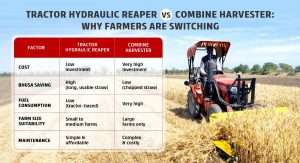
Labour tends to migrate or become scarce precisely during harvest time. When manual labour is limited, delays are inevitable. Mechanised machines fill that gap.
Advanced agricultural machines cut, collect, and even thresh efficiently, which means farmers can harvest more reliably within that narrow window.
Mechanised farming slashes the time required to harvest. According to research, mechanised harvesting using crop cutting machines can reduce losses by 5–10% compared to manual methods.
Moreover, agricultural machines cut down labour hours, freeing up farmers for other tasks.
When using mechanised agricultural machines, cutting is more precise, and the harvested material is gathered efficiently. This reduces the chance of grains shattering or being left behind.
Mechanised agricultural machines also enable harvesting at the optimal stage, when the moisture is right and the grains are neither too brittle nor too soft. This balance helps minimise losses during handling.
Furthermore, by reducing dependence on slow manual labour, farmers can complete harvesting more quickly, reducing exposure to sudden rains or lodging risks.
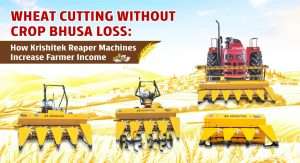
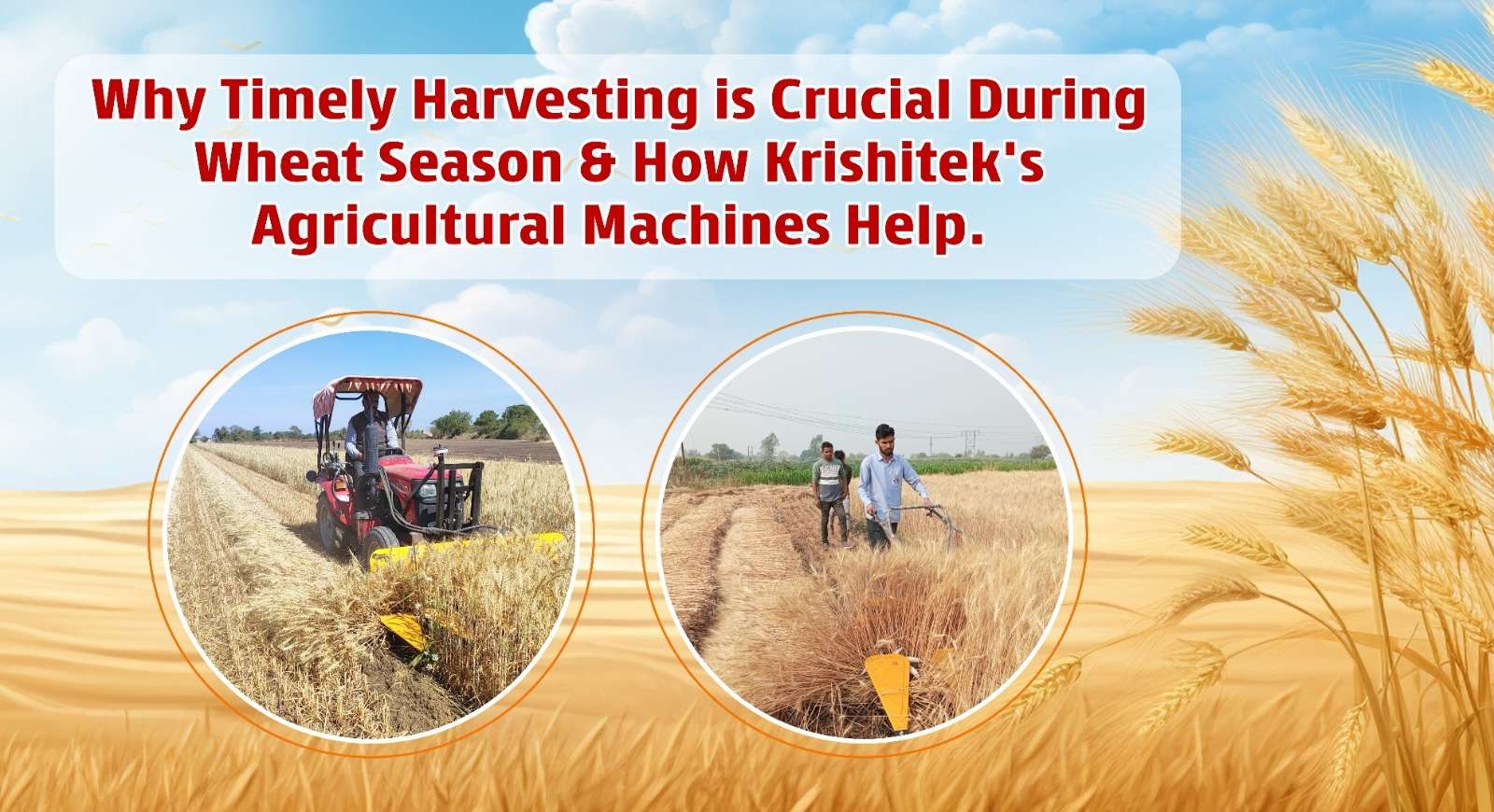
Krishitek offers a suite of agricultural machines specifically designed to help farmers harvest wheat at just the right time, with high efficiency and low losses.
Thanks to precise cutting and fast operation, less grain is lost due to shattering or wind damage.
In some regions, farmers can complete a harvest cycle just in time to prepare for the next crop or sell the produce early.
With reapers and attachments doing heavy work, dependence on manual labour declines: this saves money and lowers risk.
Harvesting at optimal moisture and maturity helps ensure grains meet quality standards. Higher-quality grain fetches better MSP (Minimum Support Price) and market rates.
Timely harvesting is a necessity during wheat season. Delays can destroy yield, quality, and ultimately profitability. Across India’s major wheat-growing states, whether it’s Gujarat, Rajasthan, UP, Bihar, Madhya Pradesh, West Bengal, Karnataka, Odisha, or the hill regions, using the right agricultural machines makes all the difference.
Krishitek’s lineup of reapers, weeder-reaper combinations, and attachments brings mechanised precision right into the farmer’s field. These agricultural machines not only help avoid loss, but also help farmers act fast, harvest clean, and earn more. For modern wheat farming, especially under unpredictable weather, this kind of support is invaluable.
Soft or wet soils reduce traction and slow performance, while dry, firm soils ensure smoother and faster harvesting.
Farmers should clean the machine, sharpen blades, check belts, lubricate moving parts, and store it in a dry place.
Regular servicing, correct blade height, proper tyre pressure, and avoiding overloading help reduce fuel use.
Through government subsidies, Kisan Credit Cards, bank agri-loans, and support from FPOs or cooperatives.
Lightweight reapers have minimal soil compaction, making them safer for long-term soil health compared to heavier machines.
Share :
This will close in 300 seconds